All Categories
Featured
Table of Contents
Omnia is the leading choice exactly since of that. The tracking is serious, the citation intelligence is specific, and the action layer is real. Omnia gives you briefs, positioning targets, and technical fixes.
You're not just tracking AI exposure, you're getting specific material and outreach jobs you can perform without a dedicated AI SEO function. Unlike tools constructed for business research study workflows, Omnia is created for teams that require to move fast with limited bandwidth. It's the most total alternative to Rankscale AI for teams that can't afford to separate measurement from execution.
Tools that rely on APIs or run queries from a single place will return balanced or region-agnostic outcomes that do not show what users in specific markets in fact see. The most trustworthy tools scrape real user interfaces from actual geographical places, so when your brand name appears in Google AI Overviews for a UK user, that's the response being caught, not a mixed proxy.
AI Writing Protocols for Growth Companies
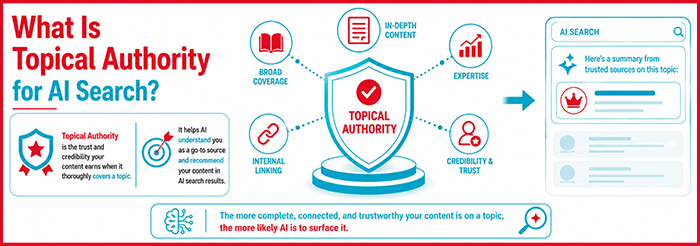
AI-generated actions shift often, and stagnant data can make steady trends look like noise. Standard SEO optimizes for crawlability, keyword relevance, and link authority so your pages rank in indexed results. AI search exposure has to do with whether your brand appears in AI-generated responses when a model synthesizes an answer, which is governed by what sources the model has found out to trust, not simply what ranks greatest.
The ramification is that content structure, citation frequency across authoritative sources, and brand consistency across the web matter as much as, and often more than, on-page SEO signals. Generative engine optimization (GEO) moves the objective from ranking for keywords to ending up being a trusted source that AI models referral when developing AI responses.
Multi-engine tracking is important here: Brand name points out in ChatGPT, Perplexity, and Google AI Overviews are governed by various retrieval logic, and a strategy that improves exposure in one engine won't automatically transfer to others. GEO is less about gaming an algorithm and more about systematically constructing the sort of reputable, citable presence that LLMs discover to surface.
Generative Engine Optimization CostDiscovery has actually moved off the search results page. Buyers now form opinions inside ChatGPT, Perplexity, Gemini, Google AI Overviews, Bing Copilot, and Claude long before they click anything on your site. The very best AI share of voice tools track how frequently your brand name appears in AI-generated responses compared to rivals across a defined timely set, and the strongest choices pair that measurement with a content action layer so visibility gaps in fact get repaired.
AI share of voice measures how often your brand appears in AI-generated responses versus rivals across a specified set of prompts and platforms. Slate leads for B2B SaaS groups that desire measurement plus execution in one system, not a reporting dashboard bolted onto a different writing tool. Monitoring-only tools tell you where you stand.
Leveraging ML for Boost Domain Authority
It is a directional metric, not an outright one, due to the fact that AI reactions differ in between sessions and platforms. What it actually determines: how often your trademark name appears in responses how typically your content is referenced as a source how often your URL is linked how your brand is described which queries surface you, which appear competitors your relative share versus called alternativesIt matters in 2026 due to the fact that discovery is multi-surface.
Based on keyword rankings and SERP impressions Based upon prompt-level points out and citations Determined on Google and Bing browse pages Determined throughout ChatGPT, Perplexity, Gemini, AI Overviews, Bing Copilot, Claude Keyword sets Prompt sets Click-through is the conversion occasion Citation addition is the exposure occasion Stable rank tracking Probabilistic, needs duplicated sampling The methodological shift matters.
Prompts assume a produced response that might vary throughout sessions, which is why AI share of voice tools rely on repeated tasting and aggregated pattern data rather than a single photo. In TrustRadius's 2025 study of 2,548 respondents (2,058 B2B innovation buyers and 490 vendors), 72% of purchasers reported coming across Google's AI Overviews throughout software research study, and 90% of those purchasers clicked at least one mentioned source inside the summary.
Growing Authority Systems via AI Automation
It is a directional metric, not an absolute one, because AI reactions differ between sessions and platforms. What it in fact measures: how typically your brand name appears in responses how frequently your content is referenced as a source how typically your URL is connected how your brand is described which queries surface you, which appear competitors your relative share against named alternativesIt matters in 2026 due to the fact that discovery is multi-surface.
Based upon keyword rankings and SERP impressions Based upon prompt-level points out and citations Determined on Google and Bing browse pages Measured across ChatGPT, Perplexity, Gemini, AI Overviews, Bing Copilot, Claude Keyword sets Prompt sets Click-through is the conversion occasion Citation addition is the exposure event Stable rank tracking Probabilistic, requires duplicated sampling The methodological shift matters.
Triggers assume a produced answer that might differ throughout sessions, which is why AI share of voice tools rely on duplicated tasting and aggregated trend information rather than a single photo. In TrustRadius's 2025 study of 2,548 participants (2,058 B2B innovation buyers and 490 vendors), 72% of purchasers reported coming across Google's AI Overviews during software research, and 90% of those buyers clicked at least one mentioned source inside the summary.

Latest Posts
Optimizing Business Content Using Next-Gen AI Tools
How to Utilize AI for Deep Topical Authority
Building Substantial Topical Depth Using ML Systems